One platform, two apps
The logic stays on your server. The iOS and Android apps use it – new features are available in both immediately.
Your customers already use your platform in the browser? We bring it to iPhone and Android as an app – with push notifications and features only an app can offer.
The logic stays on your server. The iOS and Android apps use it – new features are available in both immediately.
Push notifications, calendar entries, file uploads, printing and links that open straight in the app.
We prepare listings, screenshots and privacy details for the App Store and Google Play and guide you through review.
New iOS and Android versions arrive every year. We keep your apps current and compatible.
Many businesses already have a web platform: a customer portal, a booking system or a members' area. Writing a completely new app for two operating systems is expensive and doubles maintenance. We take a different route.
Your platform stays at the heart of it. Around it we build native apps for iOS in Swift and for Android in Kotlin. They show your platform's content and add what only an app can do: push notifications on the lock screen, appointments straight into the calendar, photo and file uploads, and links from emails that open directly in the app.
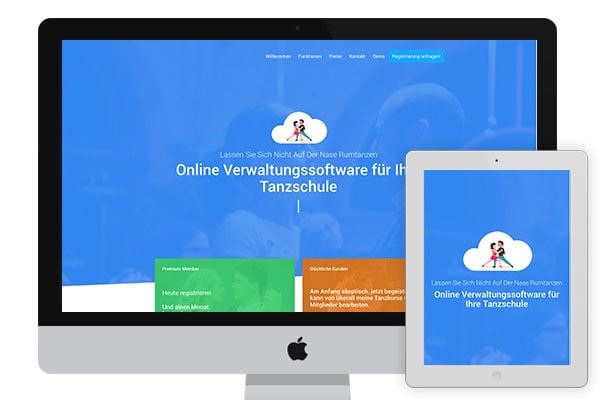
For our own platforms weDance (dance schools) and weGym (gyms) we are currently building exactly this kind of app. Studio customers book classes, see their contracts and get reminders via push – in an app carrying their studio's name. We build new features once on the server, and they are instantly available in the browser, on iPhone and on Android.
“With us, you talk directly to the person who builds your project – no sales layer in between.”
No platform yet? Then we start with the platform itself – see PHP development.
Not every company needs an app. We discuss openly whether a good mobile website is enough or whether push notifications, offline use or a store presence add real value.
We plan which features are built natively and which content comes directly from your web platform.
The iPhone and Android apps are built in parallel. We test on real devices and with automated tests.
We take care of store listings, reviews and updates – for years after launch.
Push notifications are an app’s biggest advantage over a website – and the biggest risk of annoying users. Good notifications are personal, arrive at the right time and bring a concrete benefit: an appointment reminder, a confirmation or information the user is waiting for. We set up push via Apple and Firebase so that users decide which messages they receive.
Tick what applies to you.
Not sure yet? In a free intro call we find out whether it pays off for you.
Discuss your projectFind more answers in our FAQ.
A fully native app is written separately for each platform. In our approach the business logic runs on your server, and lean native apps in Swift (iOS) and Kotlin (Android) add features like push notifications. That cuts development and maintenance costs considerably.
Apple rejects apps that merely show a website in a frame. That is why we build in real app features – push notifications, calendar and file access – and prepare the submission carefully.
Not always. If customers visit rarely, a fast mobile website is often enough. An app pays off when users come back regularly – for bookings, appointments or members' areas.
Usually your own developer accounts with Apple and Google, so the app belongs to you. We help set them up and handle the technical submission.
If the app builds on an existing platform, it is much faster than a complete new development. You get a realistic schedule together with the quote after the intro call.
We do. Apple and Google release new system versions every year. We adapt the apps so they keep running on new devices and meet store requirements.
A few lines are enough. We reply with questions or a time slot for the intro call.
Thanks, your inquiry is in!
You'll get a copy by email. We reply with questions or a time for a free intro call.